

Webasto Battery Technologies Holding GmbH Webasto Battery Technologies Holding GmbH
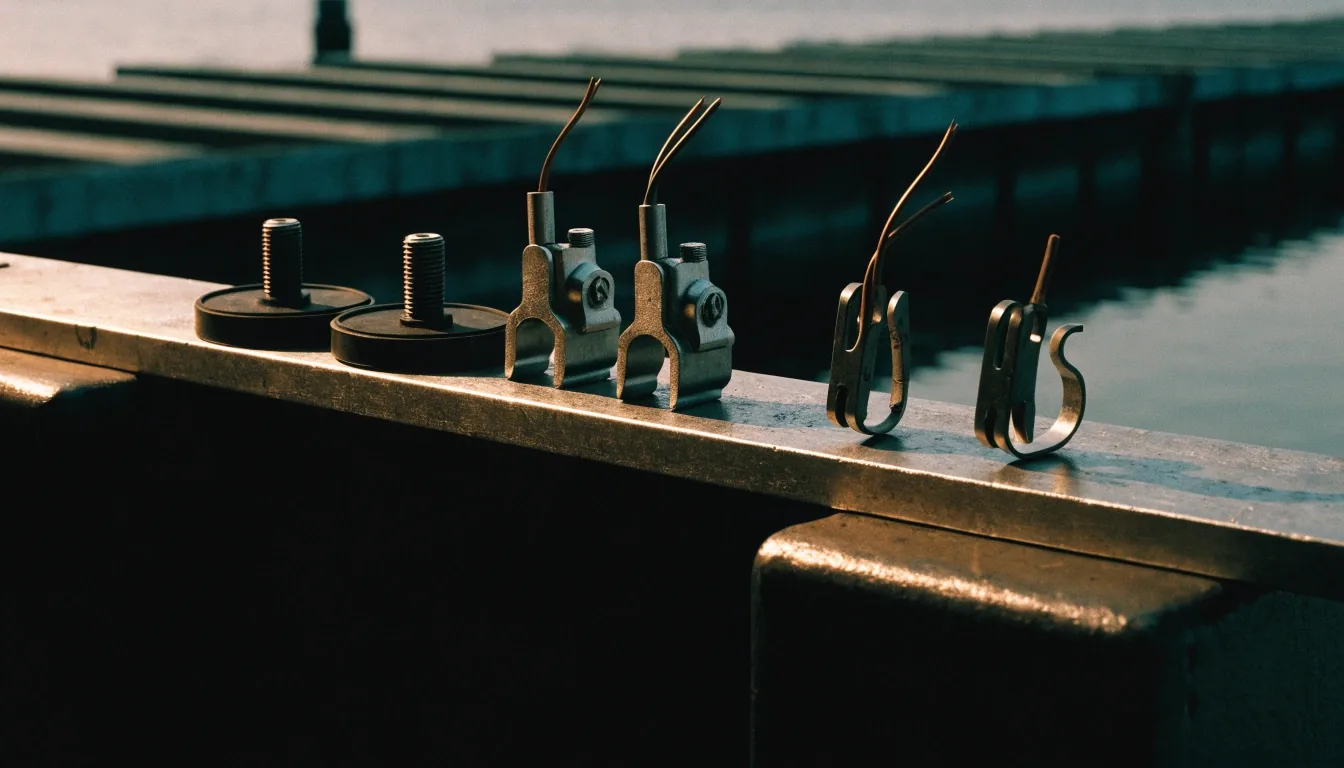
Battery terminals, cables and mounting parts laid out on a steel bench in a Stockdorf service bay

Read the charge first, then find the part

Which battery component needs replacing on your vehicle?

Components and spare parts keep a vehicle battery system working day after day. Terminals, cables, holders, clamps and monitoring parts all have a job to do, and each one can wear out. This page explains what the main components do, how to identify the correct part and what to check before you replace anything, so maintenance and repairs start from a clear picture of the battery in front of you.

The main components

Walk the rack, bay by bay

Open each bay to see what the part does, what wear looks like, and what must match when you replace it. Start at the charge reading, then work outward to the parts that carry and hold it.

Browse complete battery systems
Terminals and clamps Open

Terminals connect the battery to the vehicle wiring, and clamps hold those connections tight. A corroded or loose terminal can cause starting problems even when the battery itself is charged. When you inspect a terminal, look at the contact surfaces, the tightness of the clamp and the condition of the insulation where the cable enters. Replacement terminals must match the battery post size and the cable size. A terminal that is close in size but not exact will not sit properly.

Cables and connections Open

Cables carry current between the battery and the vehicle, and their condition matters as much as the battery. Look for cracked insulation, frayed strands, green corrosion creeping from a terminal and cables that rub against brackets or sharp edges. A damaged cable should be replaced rather than taped, because the damage will usually get worse under vibration and heat. When you buy a replacement cable, check its length, its cross-section and the type of end fitting it needs.

Holders and mounting parts Open

The holder keeps the battery fixed in position. A battery that can move will damage its terminals, strain its cables and, in the worst case, become a hazard in a collision. Holders, brackets, straps and the bolts that secure them should be checked as part of any battery inspection. If a holder is cracked or a bracket is bent, the replacement must match the original mounting points. Drilling new holes is a last resort, because it changes the vehicle’s structure and may not be covered by service requirements.

Monitoring and management components Open

Some systems include components that monitor charge, temperature or discharge level and act on that information. These parts help the battery stay within safe operating limits and give the driver or technician a clearer picture of its state. When a monitoring component fails, the symptoms can look like a battery fault, which is why the whole set-up should be checked rather than the battery alone. Replacement parts for monitoring components must match the system they belong to, including connector types and mounting positions.

Finding the correct part

Identifying the correct spare part

Start with the part number. Many components carry a number stamped, printed or moulded into them, and that number is the most reliable identifier. Next, note the position of the part and take a photo that shows its shape and connections. Then check the size details that matter for that part: post diameter for a terminal, length and cross-section for a cable, fixing points for a holder. Two parts can share a name and a similar shape while differing in one of those details.

When to repair and when to replace

Small amounts of corrosion on a terminal can be cleaned and the connection can be retightened. Cracked insulation, a split holder or a clamp that no longer holds tight are replacement jobs. The deciding question is whether the part can be returned to a clean, firm condition that will stay that way under vibration. If the answer is no, replace it. Keeping a short record of what was cleaned, tightened or replaced also helps the next person who works on the vehicle.

Clean and retighten, or replace — nothing in between

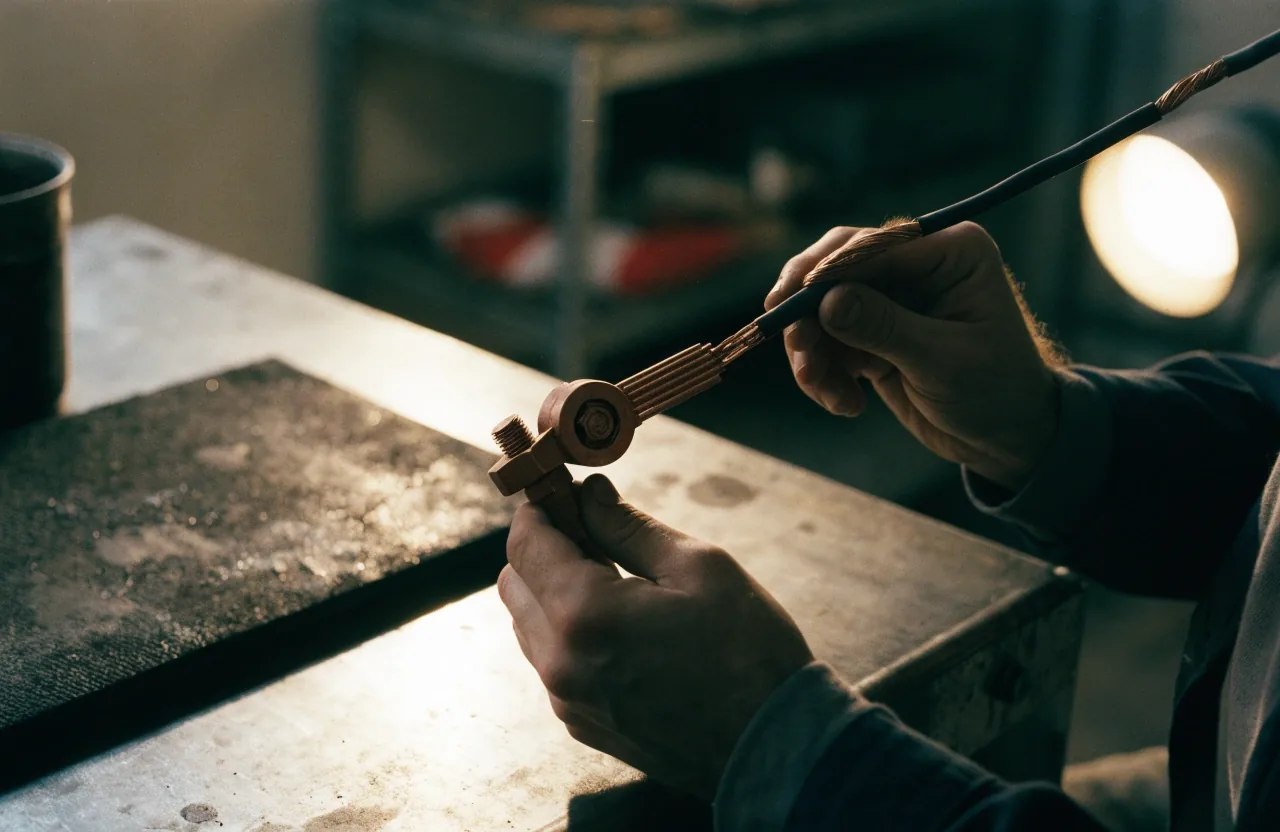
A cable and terminal being checked at the bench

Check the contact surfaces and the clamp first. If the metal is damaged, cleaning will not bring the connection back.

Keeping spare parts organised

Workshops and owners who run more than one vehicle benefit from keeping a small stock of the parts that fail most often: terminals, clamps and, where relevant, a suitable cable. Label each part with its number and the vehicle it came from. Store parts where they stay clean and dry, and check them before fitting rather than assuming they are ready. An organised shelf turns a repair from a search into a routine task.

Terminals / clamps / cable — labelled and dry

Ordering parts with confidence

An enquiry for a spare part works best when it includes the part number, a photo and a short description of where the part sits in the system. If the number is not readable, say so and describe the part’s size and connections instead. That honesty helps the team find the correct match or explain what other detail is needed. Avoid ordering on shape alone. A part that almost fits is a part that will cause a second visit.

Number + photo + position

Questions from the bench

Before you fit anything

If your answer is not here, send the part number and a photo with your enquiry. It is the fastest way to a correct match.

How do I know which part I need? + / −

Use the part number first, then the position of the part and a photo. Size details such as post diameter or cable length confirm the match.

Can a corroded terminal be cleaned instead of replaced? + / −

Light corrosion can be cleaned and the clamp retightened. If the clamp no longer holds firmly or the metal is damaged, replacement is the safer choice.

Should I replace all components at the same time? + / −

Not always. Replace the parts that are worn or damaged, and check the rest. If several parts are at the end of their life, reviewing the whole set-up may save repeat work.

End of the bench

Send the number, the photo and the position

For Webasto Battery Technologies Holding GmbH in Stockdorf, vehicle battery components and spare parts for professional and private vehicle applications. Include what you can read — and say plainly what you cannot.

Address

Kraillinger Str. 5, 82131 Stockdorf

Hours

Monday to Friday, 9:00 AM – 6:00 PM